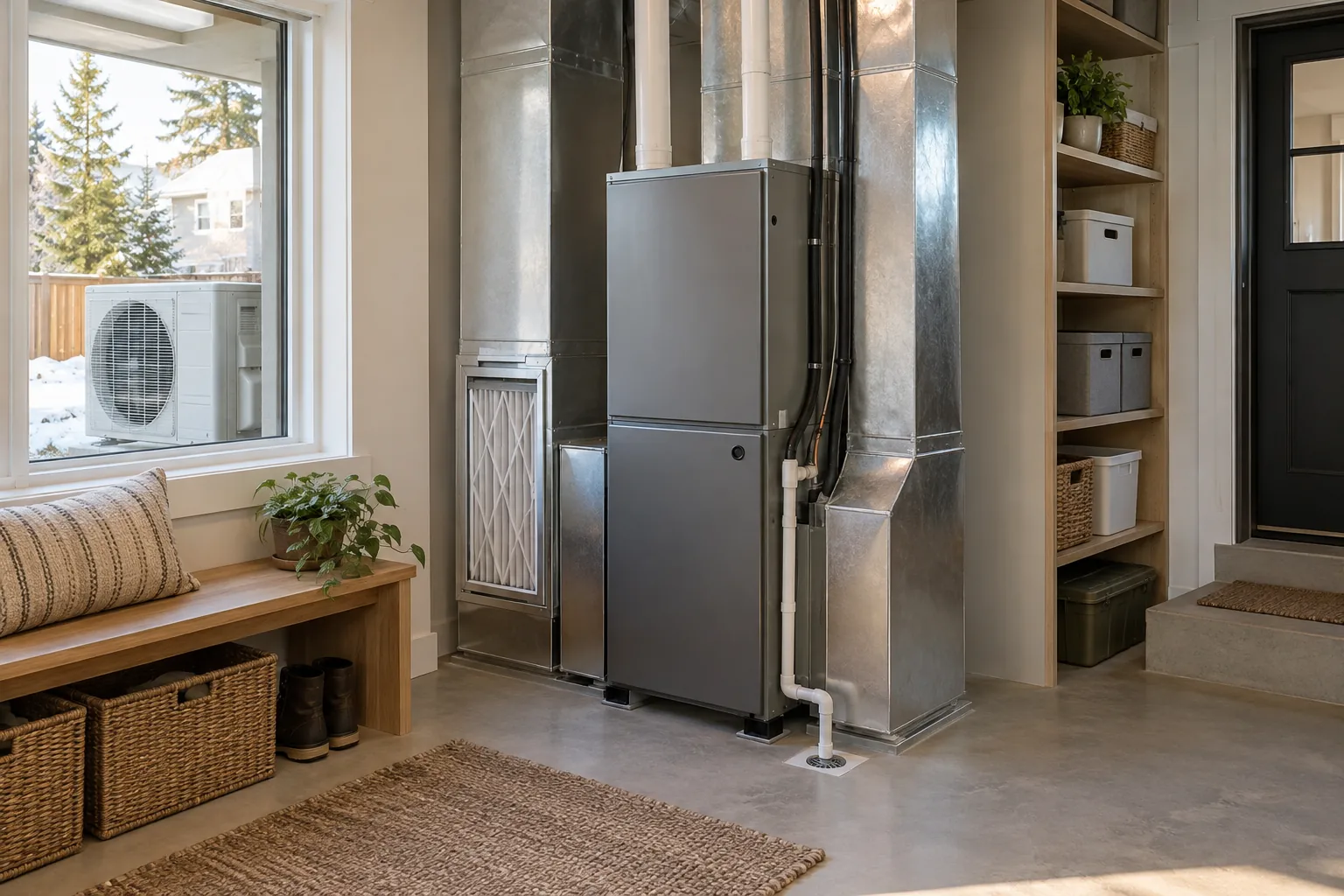
Compare a different way of producing household hot water without treating a technology label as a universal performance promise.
Define the performance outcome
Ask the suitable professional to review hot-water demand, space, ambient conditions, sound, condensate, electrical supply and the selected product’s operating requirements. Natural Resources Canada describes heat-pump water heaters as transferring heat from surrounding air to the stored water, making room conditions part of the decision.
Design around the retained home
The conversion can affect the surrounding space and may need a different service arrangement from the old heater. Explain backup or operating modes, delivery limitations and current product guidance. Routine care and first fitting remain coordinated stages; renewing an unchanged failed heater belongs at Replacing.
Coordinate the improvement sequence
Agree the assessment and design decisions before ordering products or opening finishes. The completion brief should address selected operating strategy documented, applicable commissioning recorded, room effects and product care explained. Identify the responsible specialist, preparation, fitting and reinstatement stages. Keep any defect repair separate from the intended improvement so the household can understand what the project changes and what remains.
What shapes the scope?
- Demand and room conditions
- Product and electrical compatibility
- Condensate and acoustic considerations
- Removal commissioning and access
What should be checked?
- Selected operating strategy documented
- Applicable commissioning recorded
- Room effects and product care explained
Questions worth asking
What makes this an upgrade rather than ordinary renewal?
Adds heat-pump domestic water heating, distinct from space-heating heat pumps, tankless systems and same-role heater renewal. This brief is for an assessed improvement in capability or performance. Same-role renewal of a failed component belongs at Replacing; first fitting and routine care remain separate Installing and Maintaining stages.
What should the initial proposal explain?
Ask for the intended outcome, existing-condition assumptions and the evidence needed to select a suitable approach. Include demand and room conditions and product and electrical compatibility. The provider should identify design responsibilities, limitations and the checks that make the result assessable without guaranteeing a universal saving or outcome.
Bring the details together.
Add this service to My project. Tell HAUSE what you have, what you want to achieve and where the work is needed. A clearer brief makes it easier to discuss the right assessment, responsible trades and written scope.
Build my project brief ↗