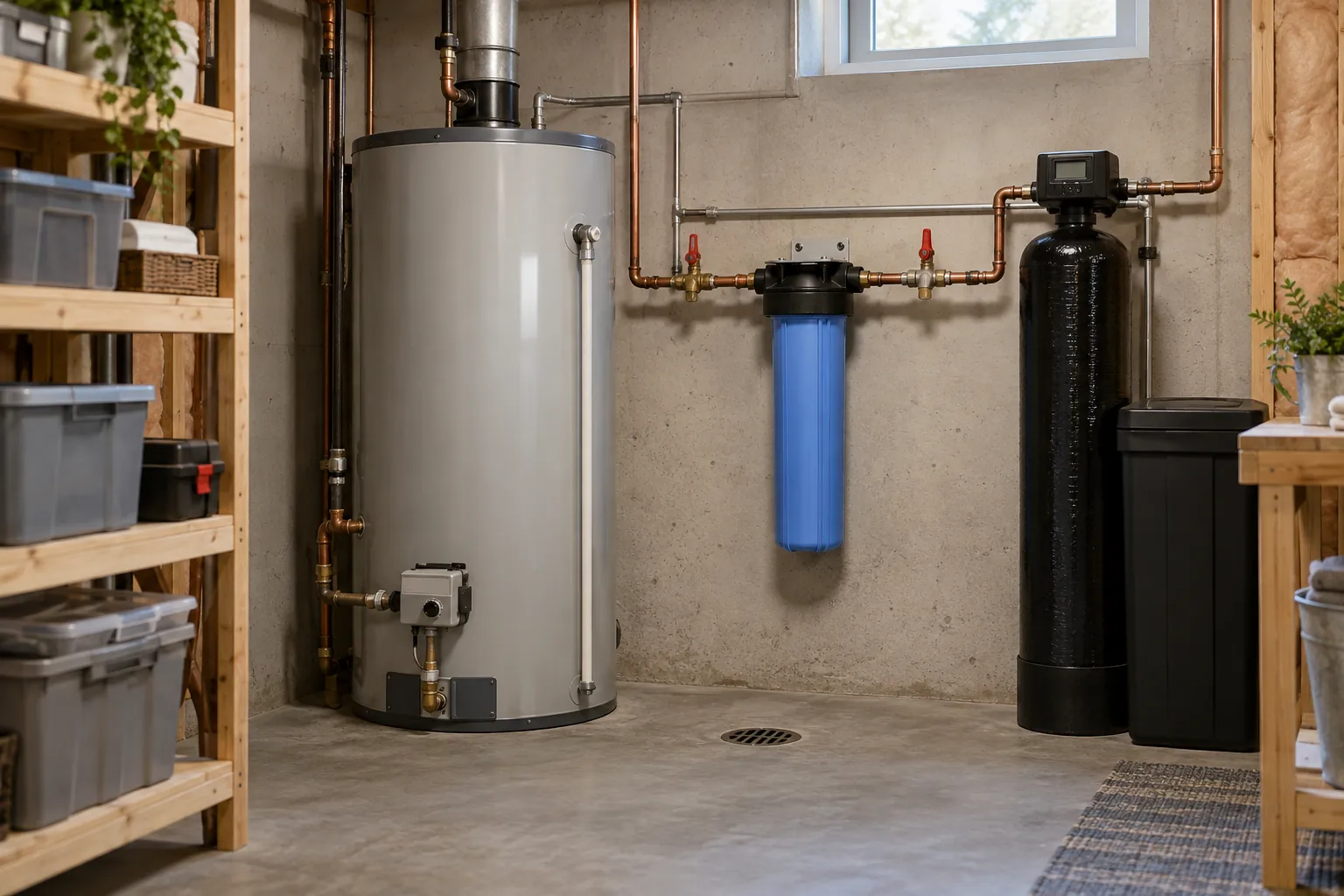
Choose a drinking-water improvement around a defined quality concern rather than a general promise of cleaner water.
Assess the existing conditions
Identify the source supply and the actual objective, such as taste or a tested contaminant. Use appropriate water information or testing before selecting treatment; different devices address different concerns.
Choose the complete system
Compare certification for the claimed reduction, flow and replacement-cartridge needs. Point-of-use and whole-home treatment serve different purposes, and a device certified for one claim should not be assumed to address every water risk.
Plan the connected work
Plan accessible installation, isolation and cartridge changes with a suitable provider. Keep the product identification, certification claim and ongoing care schedule together at handover.
What shapes the scope?
- Water information or testing needed for selection
- Defined treatment objective and certified performance
- Available space, flow and plumbing connections
- Replacement consumables and service access
What should be checked?
- Installed device matches the agreed treatment claim
- Connections and usable flow are checked
- Cartridge information and care schedule are supplied
Questions worth asking
Should every home have whole-house filtration?
Not automatically. Match treatment to the actual water and the point where the benefit is needed.
Does certification mean all contaminants are removed?
No. Health Canada advises checking the applicable certified performance claim, not treating certification as a universal guarantee.
Bring the details together.
Add this service to My project. Tell HAUSE what you have, what you want to achieve and where the work is needed. A clearer brief makes it easier to discuss the right assessment, responsible trades and written scope.
Build my project brief ↗