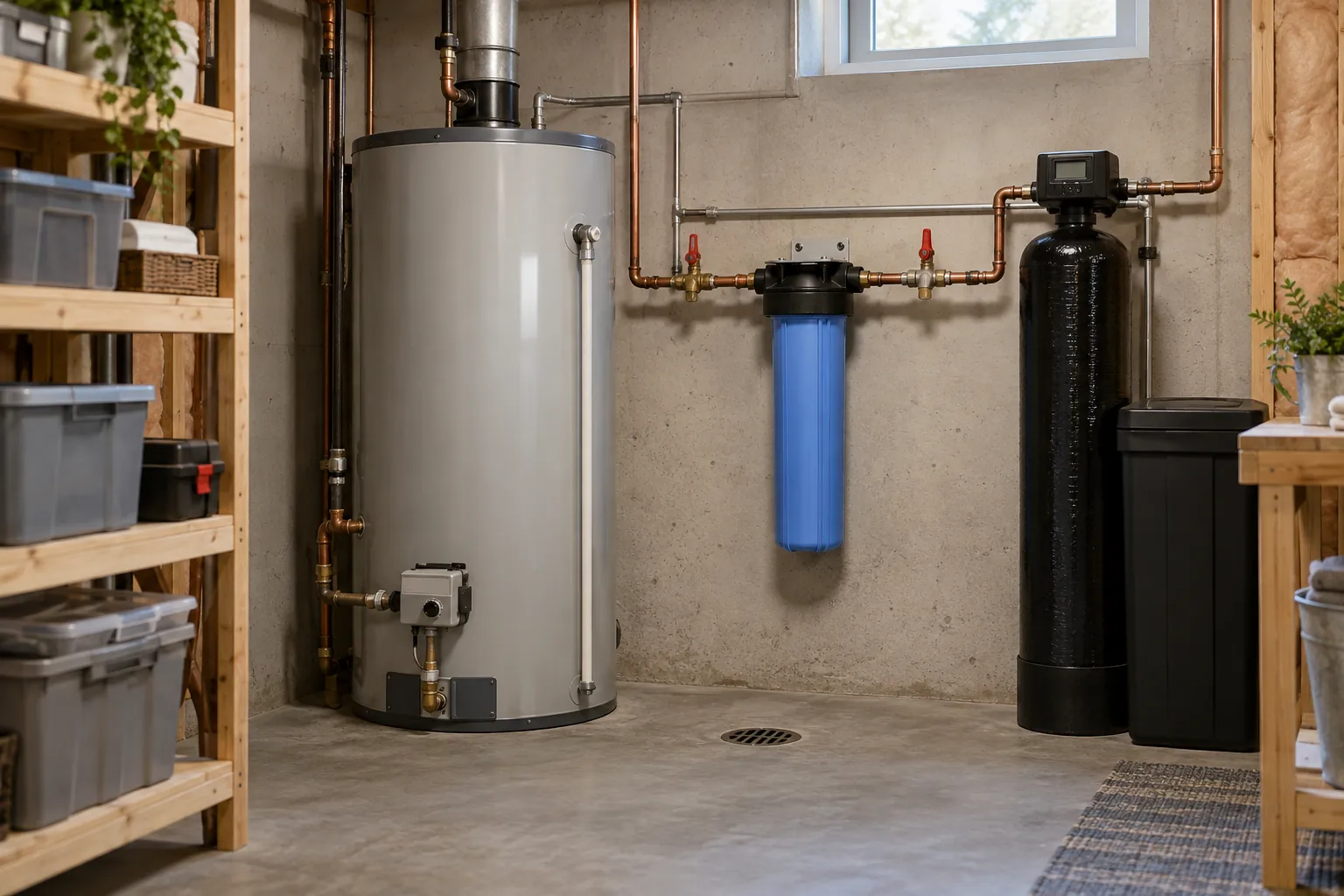
Explore targeted drinking-water treatment with a reverse-osmosis system selected for the water concern, available space and daily demand.
Assess the existing conditions
Assess source-water information, supply conditions and the contaminants of concern. Reverse osmosis is a treatment method, not a substitute for identifying what the household actually needs reduced.
Choose the complete system
Compare certified claims, usable output, storage and reject-water arrangements for the exact model. Check how the unit will share the sink cabinet with bins, a trap and other retained equipment.
Plan the connected work
Coordinate the drinking-water outlet, drain connection and accessible isolation with a plumbing provider. Define cartridge care and replacement access so the system remains manageable after organizers return.
What shapes the scope?
- Water assessment and selected certified claims
- System output, storage and cabinet space
- Supply, drain and drinking-water outlet connections
- Cartridge replacement and servicing access
What should be checked?
- Installed model and treatment objective are documented
- Connections and intended outlet operation are tested
- Consumable and care information is handed over
Questions worth asking
Will reverse osmosis remove every possible concern?
No single general claim is enough. Compare the exact certification and intended application with the water assessment.
Can the equipment be hidden behind permanent cabinetry?
Keep the required service and cartridge access. Concealment should not make routine care or isolation impractical.
Bring the details together.
Add this service to My project. Tell HAUSE what you have, what you want to achieve and where the work is needed. A clearer brief makes it easier to discuss the right assessment, responsible trades and written scope.
Build my project brief ↗