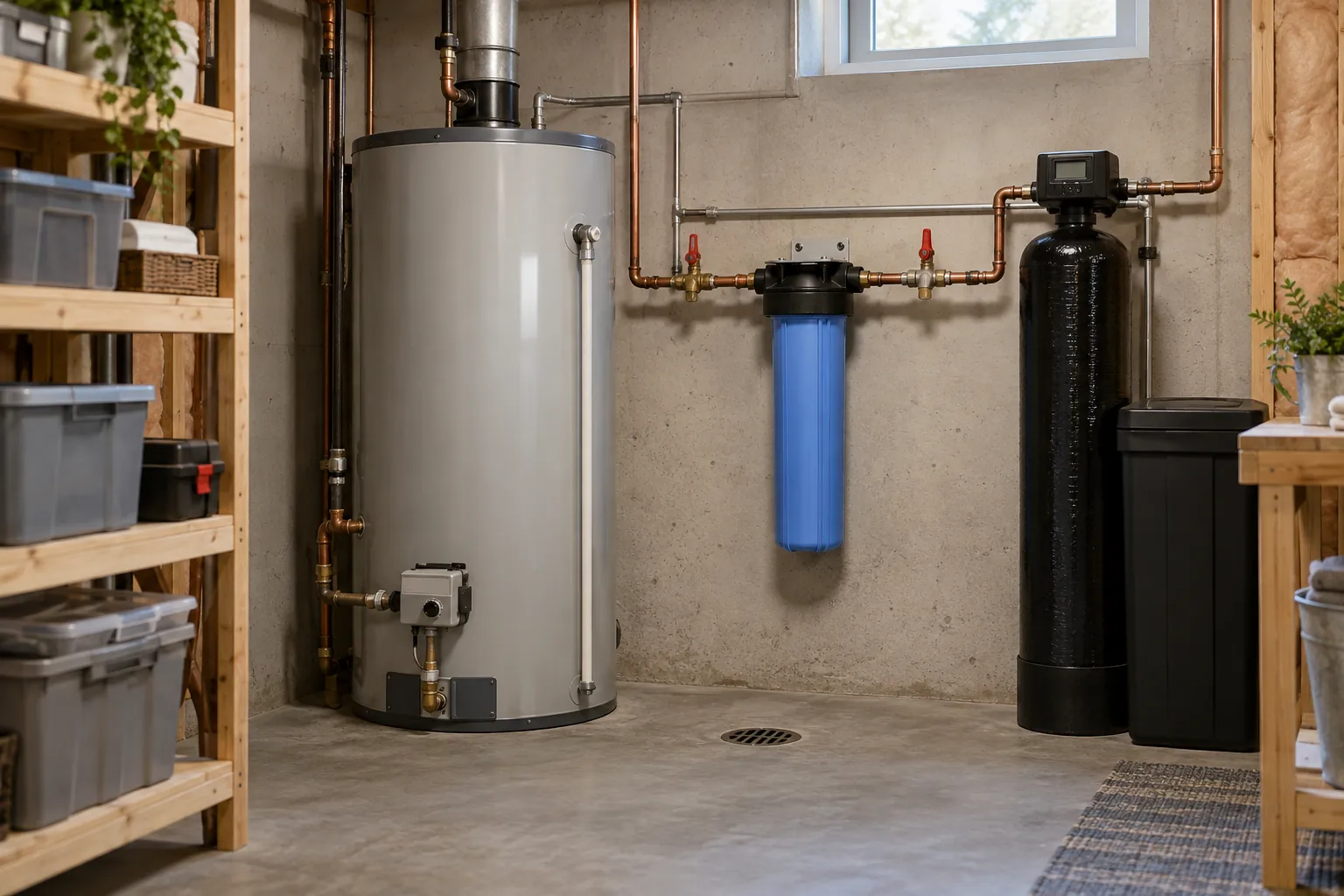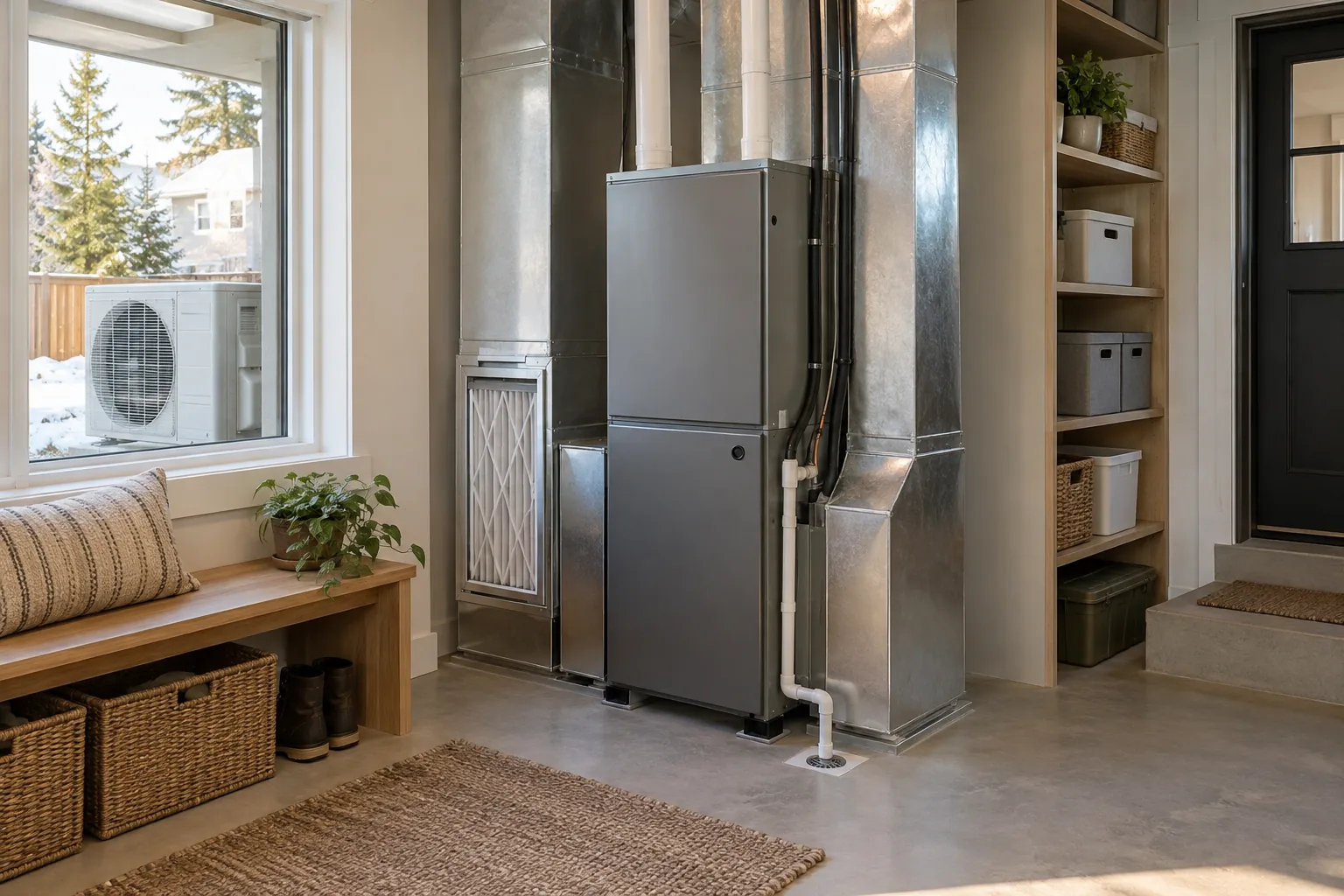
Improve hot-water capability with a tankless proposal based on simultaneous use, incoming water conditions and the existing home's services.
Assess the existing conditions
List showers, baths and appliances used together, then assess fuel or electrical capacity, venting and available location. Ask the specialist to size for the required temperature rise rather than maximum advertised flow alone.
Choose the complete system
Compare equipment configuration, recirculation options and service access. A tankless unit does not automatically eliminate the wait at a distant tap; distribution and controls are separate design decisions.
Plan the connected work
Coordinate plumbing, venting, condensate and connected electrical work where applicable. Request commissioning and water-quality or maintenance guidance for the exact model, with outage and temporary hot-water arrangements agreed.
What shapes the scope?
- Simultaneous demand and incoming-water design conditions
- Fuel, electrical and venting alterations
- Distribution, recirculation and service access
- Commissioning, restoration and maintenance provisions
What should be checked?
- Selected capacity and operating assumptions are documented
- Hot-water operation and relevant connections are tested
- Model-specific care and service access are explained
Questions worth asking
Does tankless mean unlimited flow?
No. Available flow depends on the unit and required temperature rise; compare the household's simultaneous demands.
Will the furthest tap become instant?
Not simply from changing the heater. Pipe length and any designed recirculation arrangement affect waiting time.
Bring the details together.
Add this service to My project. Tell HAUSE what you have, what you want to achieve and where the work is needed. A clearer brief makes it easier to discuss the right assessment, responsible trades and written scope.
Build my project brief ↗