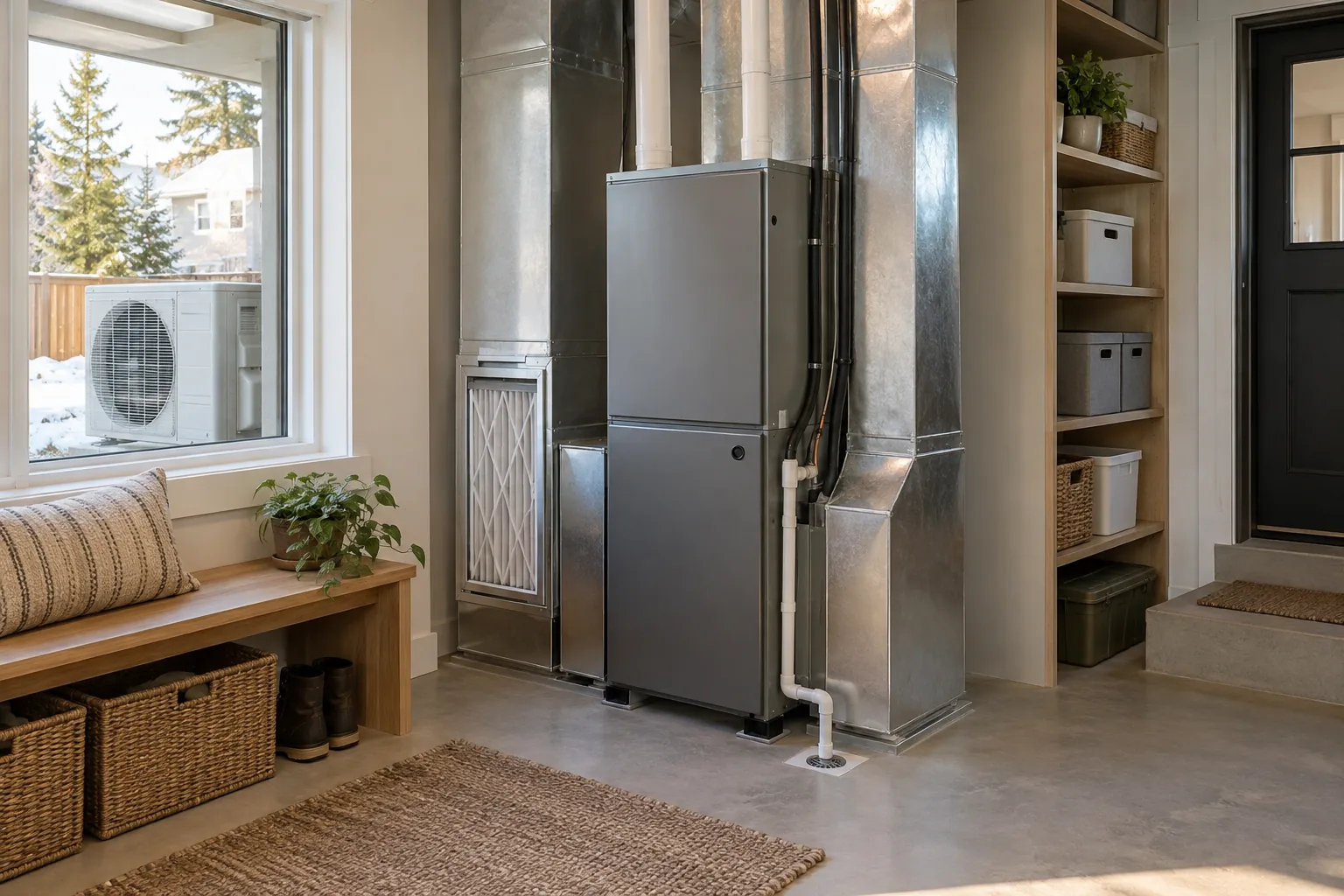
Decide what must keep working during an outage before comparing generator or battery options for an existing home.
Assess the existing conditions
List essential loads, their starting demands and desired operating duration. Include communications, heating controls, refrigeration and medical equipment where relevant, with specialist advice for critical personal needs.
Choose the complete system
Compare automatic or manual operation, safe transfer arrangements and the energy source. Outdoor generator location, battery siting and fuel or charging needs are different design questions.
Plan the connected work
Have qualified providers assess electrical integration and equipment requirements. Define outage testing, operating instructions and maintenance responsibilities without promising uninterrupted service or a fixed runtime unsupported by the load plan.
What shapes the scope?
- Essential-load assessment and desired duration
- Equipment location and electrical integration
- Transfer equipment and connected trade work
- Testing, operation and ongoing care requirements
What should be checked?
- Documented loads match the agreed backup arrangement
- Transfer and operating procedures are demonstrated
- Limits, maintenance and emergency information are supplied
Questions worth asking
Can I back up the entire house?
Possibly, but compare that objective with actual demand, equipment capacity and practical duration.
Is a portable generator equivalent to a fixed system?
No. Connection, location, operation and maintenance differ; ask for a safe, equipment-specific plan.
Bring the details together.
Add this service to My project. Tell HAUSE what you have, what you want to achieve and where the work is needed. A clearer brief makes it easier to discuss the right assessment, responsible trades and written scope.
Build my project brief ↗