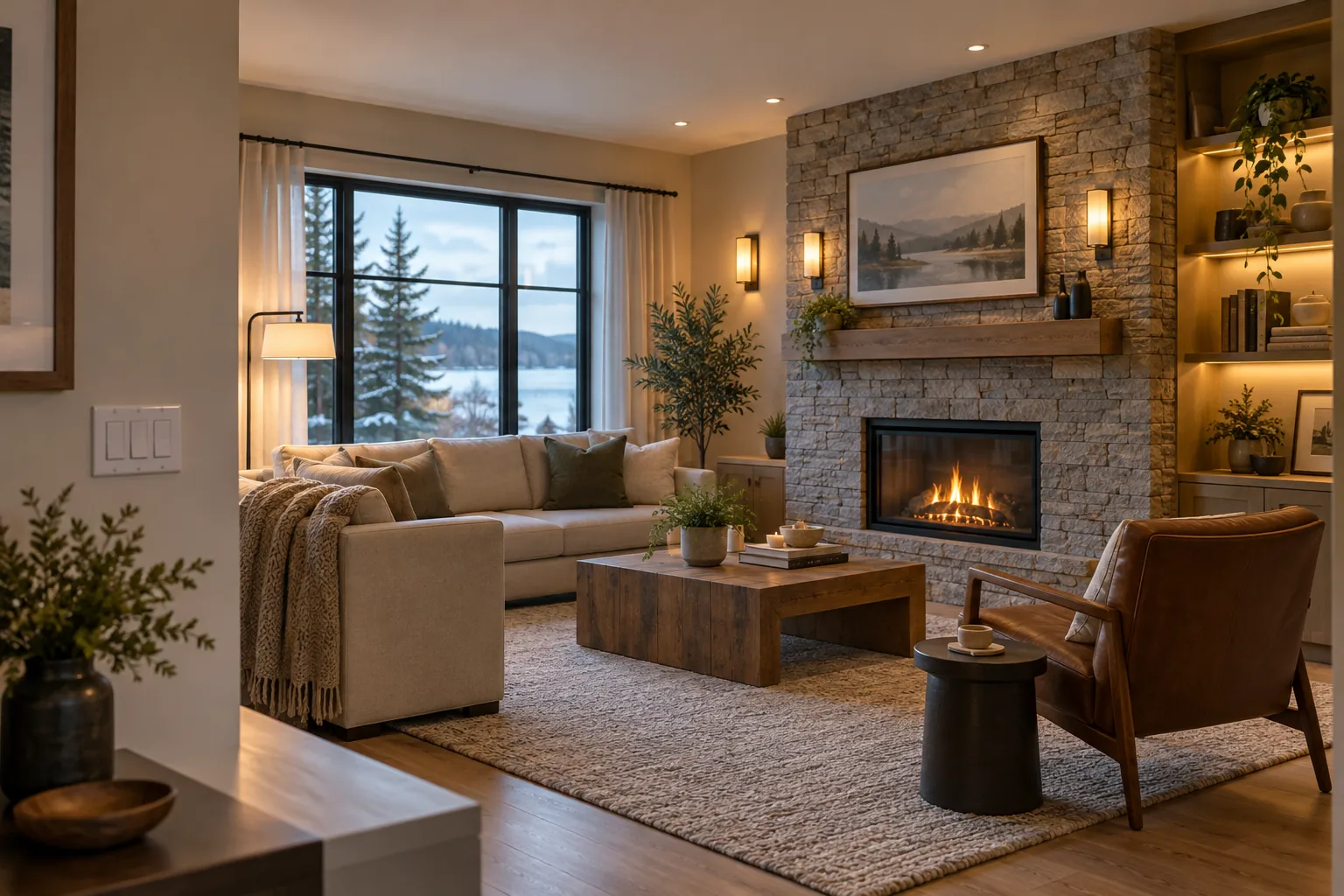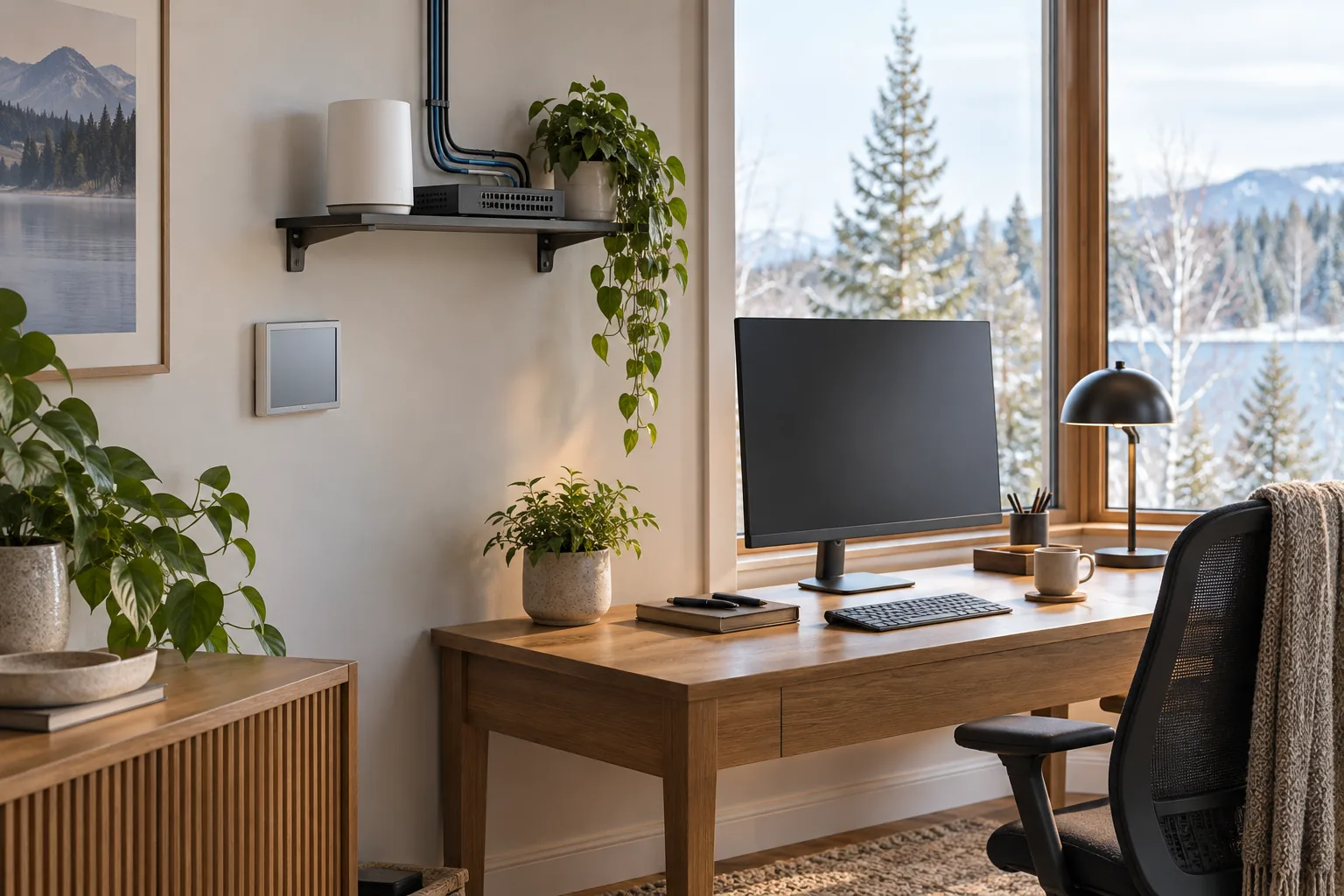
Make an existing room easier to work in and more comfortable to relax in by giving each lighting layer a clear purpose.
Assess the existing conditions
Map tasks, seating and the direction of daylight, then record existing circuits and controls. Notice where people cast shadows on their own work or see bright reflections in screens and polished surfaces.
Choose the complete system
Compare ambient, task and accent light as a coordinated arrangement. Colour appearance, glare and control matter alongside output; a room with more fixtures is not automatically a better-lit room.
Plan the connected work
Use a representative sample or temporary demonstration before repeating a fitting. Coordinate electrical assessment, ceiling access and decoration, with simple scenes the household can understand without an app.
What shapes the scope?
- Room layout and number of lighting zones
- Existing wiring and ceiling-access requirements
- Fixture optics, colour appearance and compatible controls
- Surface restoration and scene commissioning
What should be checked?
- Important tasks receive useful light without harsh glare
- Switches and agreed scenes operate predictably
- Fixture and control information is handed over
Questions worth asking
Should all lamps have the same colour temperature?
Consistency can help, but the task and desired atmosphere matter. View samples together in the room.
Can smart controls replace a lighting plan?
No. Controls improve operation, while fixture placement and light distribution still determine what the room feels like.
Bring the details together.
Add this service to My project. Tell HAUSE what you have, what you want to achieve and where the work is needed. A clearer brief makes it easier to discuss the right assessment, responsible trades and written scope.
Build my project brief ↗