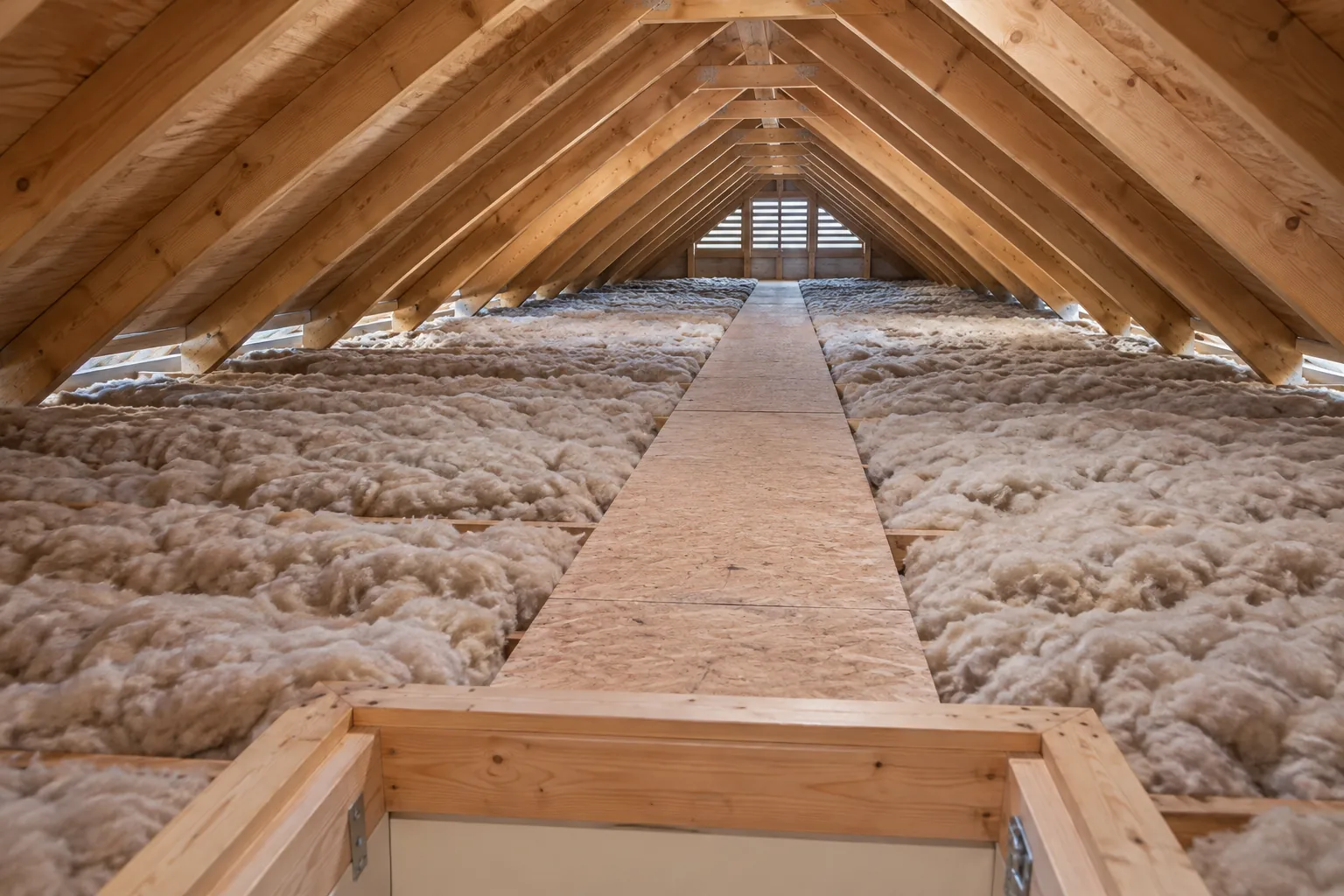
Improve the upper envelope of an existing home by coordinating insulation with air leakage, moisture and the attic's safe access conditions.
Assess the existing conditions
Have the accessible attic assessed for material type, leakage paths and signs of moisture. Suspect vermiculite or other uncertain materials require appropriate assessment before disturbance.
Choose the complete system
Compare the proposed insulation with existing ventilation, service clearances and access needs. Adding depth without resolving air leakage or blocked pathways can leave important problems untreated.
Plan the connected work
Sequence investigation, sealing and insulation with the appropriate specialists. Retain evidence of concealed details and the selected product, with safe access for future equipment or roof work considered.
What shapes the scope?
- Existing insulation and material-assessment needs
- Air-sealing scope and accessible penetrations
- Ventilation, service clearances and access arrangements
- Insulation system and documented completion checks
What should be checked?
- Assessed moisture or material concerns are addressed
- Air-sealing and ventilation details are documented
- Product and installed-scope information is retained
Questions worth asking
Should more insulation be the first step?
Not always. NRCan's guidance emphasizes assessing air leakage and attic conditions alongside insulation.
Can I inspect suspect insulation myself?
Do not disturb uncertain material to obtain a photograph or sample. Arrange an appropriate professional assessment.
Bring the details together.
Add this service to My project. Tell HAUSE what you have, what you want to achieve and where the work is needed. A clearer brief makes it easier to discuss the right assessment, responsible trades and written scope.
Build my project brief ↗