Walls and trim shape the character of a room through proportion, texture and the way light meets the surface. Good preparation makes those choices convincing without promising that every old irregularity will disappear.
Name the condition being changed
Separate impact damage, moving cracks, staining and a dislike of colour. A finish specialist can repair a suitable surface; recurring movement or dampness needs its cause investigated first. In an older home, material assessment may be needed before sanding or opening existing finishes.
Judge samples where they will live
View paint, plaster or panel samples under daylight and evening lighting. Sheen can make repairs more visible; a deeply textured finish can be attractive but harder to clean or match later. Define the expected finish and the viewing conditions instead of relying on vague requests for perfection.
Resolve edges and hidden interfaces
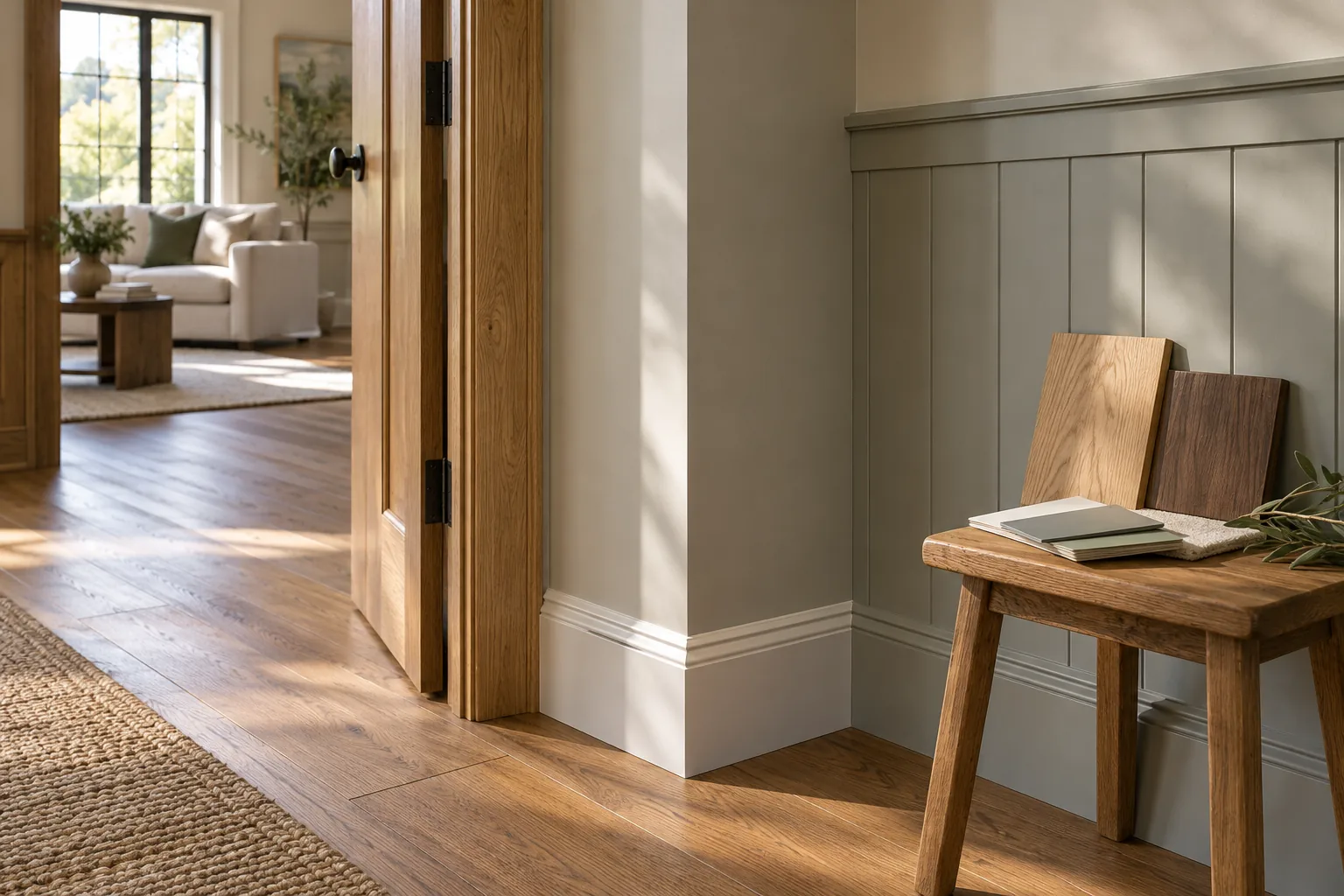
Baseboards meet uneven floors, crown profiles meet ceilings and panelling meets sockets or doors. Measure the setting-out lines and choose stopping points before manufacture. Retain access to service covers and avoid trapping moving floor systems beneath new trim.
Protect life around the work
Agree containment, ventilation, furniture protection and the time between coating stages. Include the reinstatement of fittings and a final review of repaired areas. Share the room's intended mood and its actual condition with HAUSE so a provider can recommend a practical finish system and identify the preparation it depends on.
Details to bring into the conversation
- A recurring crack or stain needs diagnosis rather than repeated cosmetic filling.
- Dry-to-touch and ready-for-normal-use are different coating milestones.
- Confirm what finish matching means beside an aged surrounding surface.