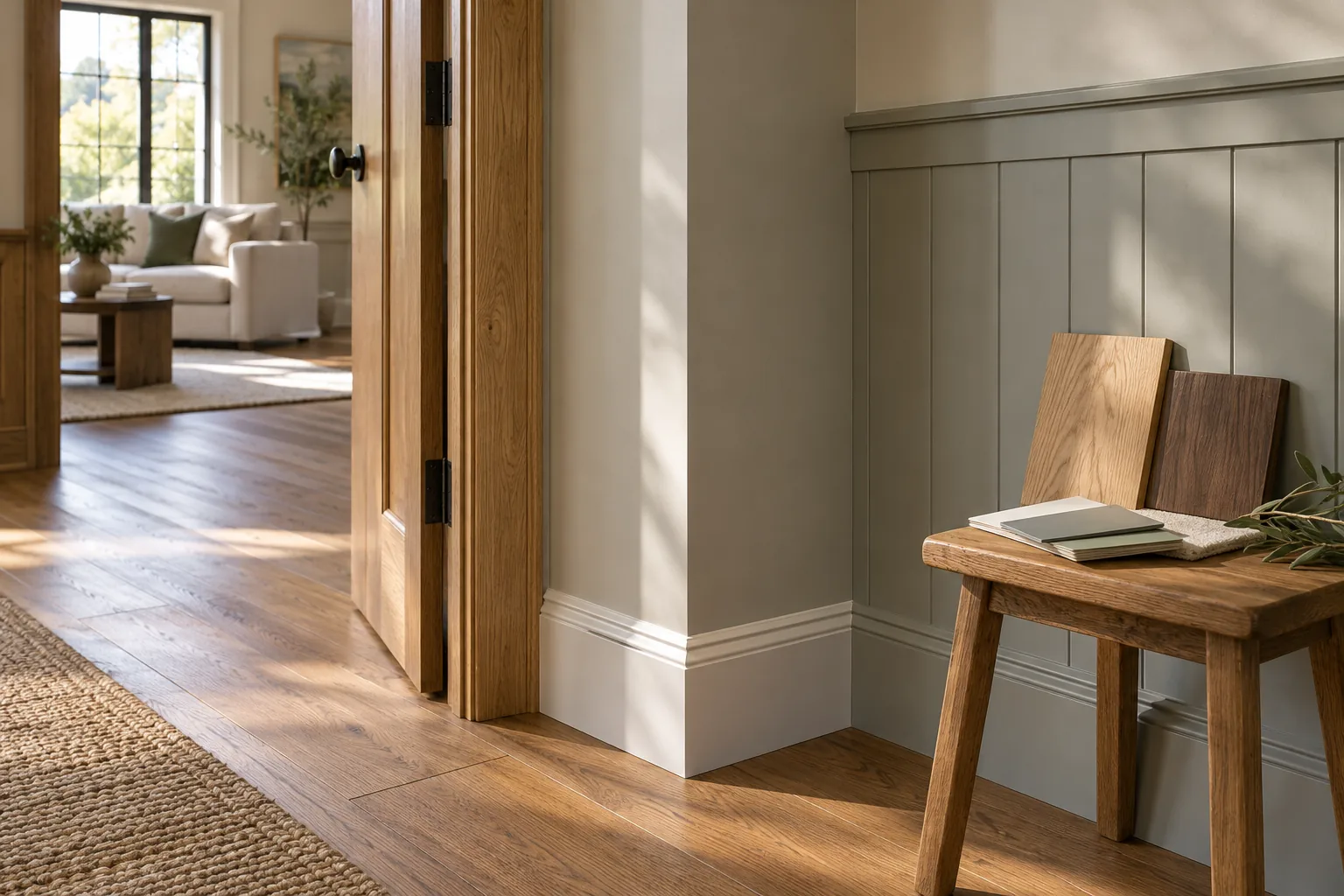
Introduce a mineral or plaster texture that responds to the room's light, with a sample-led specification and a suitable supporting surface.
Assess the existing conditions
Assess substrate stability, contamination and moisture exposure. The specialist should explain which primers or base layers belong to the selected system and where existing cracks or movement need separate attention.
Choose the complete system
Approve a sufficiently large sample showing colour, trowel variation and sheen. Handmade texture is part of the finish, so compare the desired character with cleaning needs and future repair expectations.
Plan the connected work
Define edges, corners and transitions before application. Coordinate nearby wet zones, controls and decoration, and agree protection and return-to-use conditions for the chosen finish rather than assuming it behaves like ordinary paint.
What shapes the scope?
- Substrate preparation and system compatibility
- Finish type, sample approval and application complexity
- Corners, reveals and stopping-point details
- Protection, curing and future repair requirements
What should be checked?
- Installed texture is reviewed against the approved sample
- Edges and transitions follow the agreed design
- Product-specific cleaning and repair guidance is supplied
Questions worth asking
Will every part of the wall look identical?
A hand-applied finish normally has variation. Define the intended range through a representative sample before committing.
Can decorative plaster be used in a shower?
Only if the selected complete system explicitly suits that exposure and the waterproofing design is coordinated; appearance alone is insufficient.
Bring the details together.
Add this service to My project. Tell HAUSE what you have, what you want to achieve and where the work is needed. A clearer brief makes it easier to discuss the right assessment, responsible trades and written scope.
Build my project brief ↗