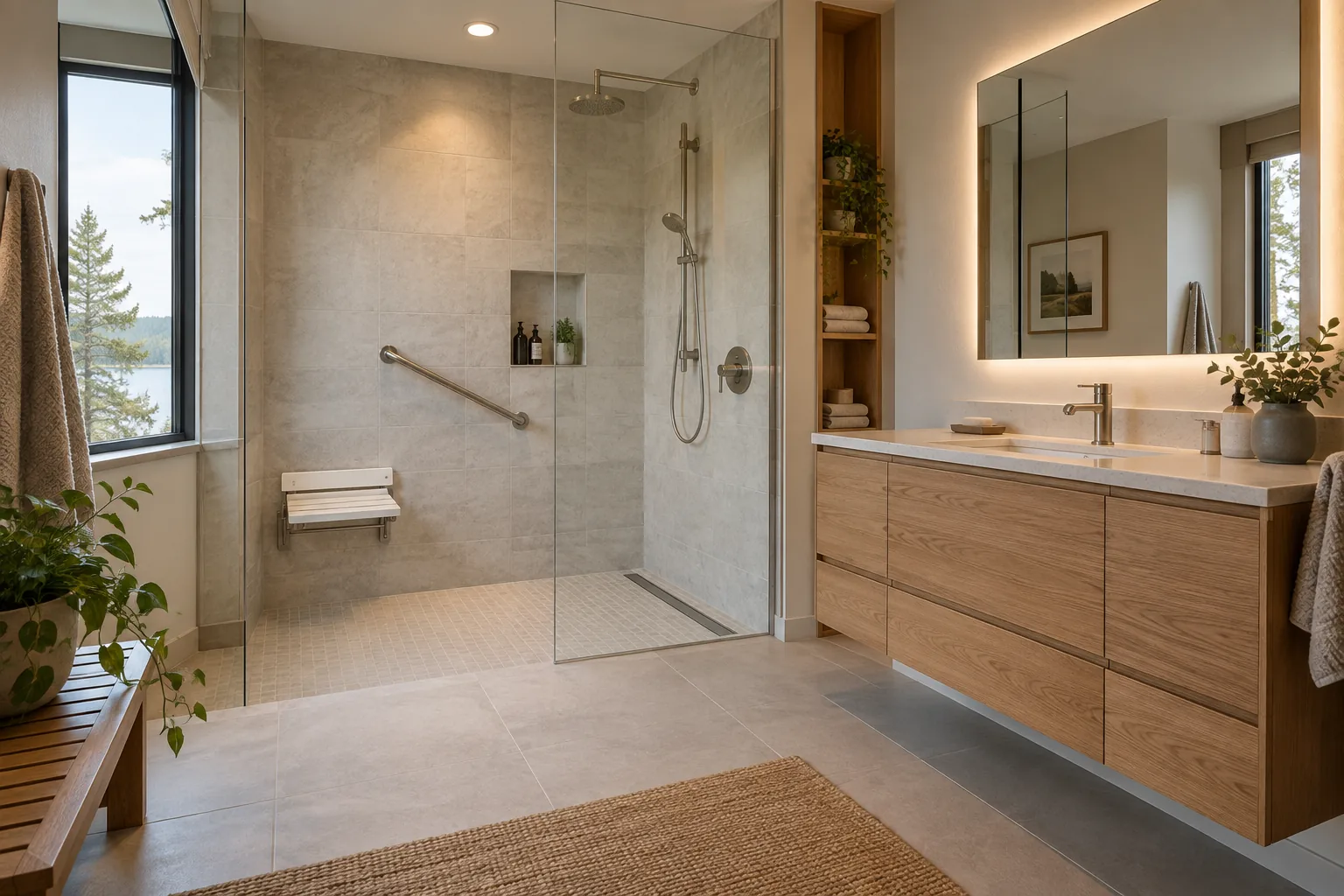
Make existing doors and storage easier to operate with hardware selected for grip, reach and the way the household uses it.
Assess the existing conditions
Identify tasks that require difficult pinching, twisting or pulling. Check door alignment, latch condition and existing fixing patterns before choosing a new handle or pull.
Choose the complete system
Compare lever shape, operating effort and clearance using samples. A longer handle may improve grip but collide with a wall, snag clothing or conflict with nearby cabinetry.
Plan the connected work
Define any fixing-hole repairs and connected door work. Demonstrate normal opening, closing and locking with the intended user, keeping product information for future matching.
What shapes the scope?
- Number of doors or fronts and existing hardware patterns
- User-specific grip and operating needs
- Latch compatibility and local door-condition work
- Redundant-hole repairs and finish matching
What should be checked?
- Hardware operates comfortably through the intended task
- Handles clear walls and adjacent fittings
- Fixings and product information are documented
Questions worth asking
Will a lever solve a heavy or sticking door?
Not by itself. Door condition and operating forces should be assessed alongside the hardware.
Should every handle be identical?
A consistent family can look good, but different tasks may need different practical shapes or sizes.
Bring the details together.
Add this service to My project. Tell HAUSE what you have, what you want to achieve and where the work is needed. A clearer brief makes it easier to discuss the right assessment, responsible trades and written scope.
Build my project brief ↗