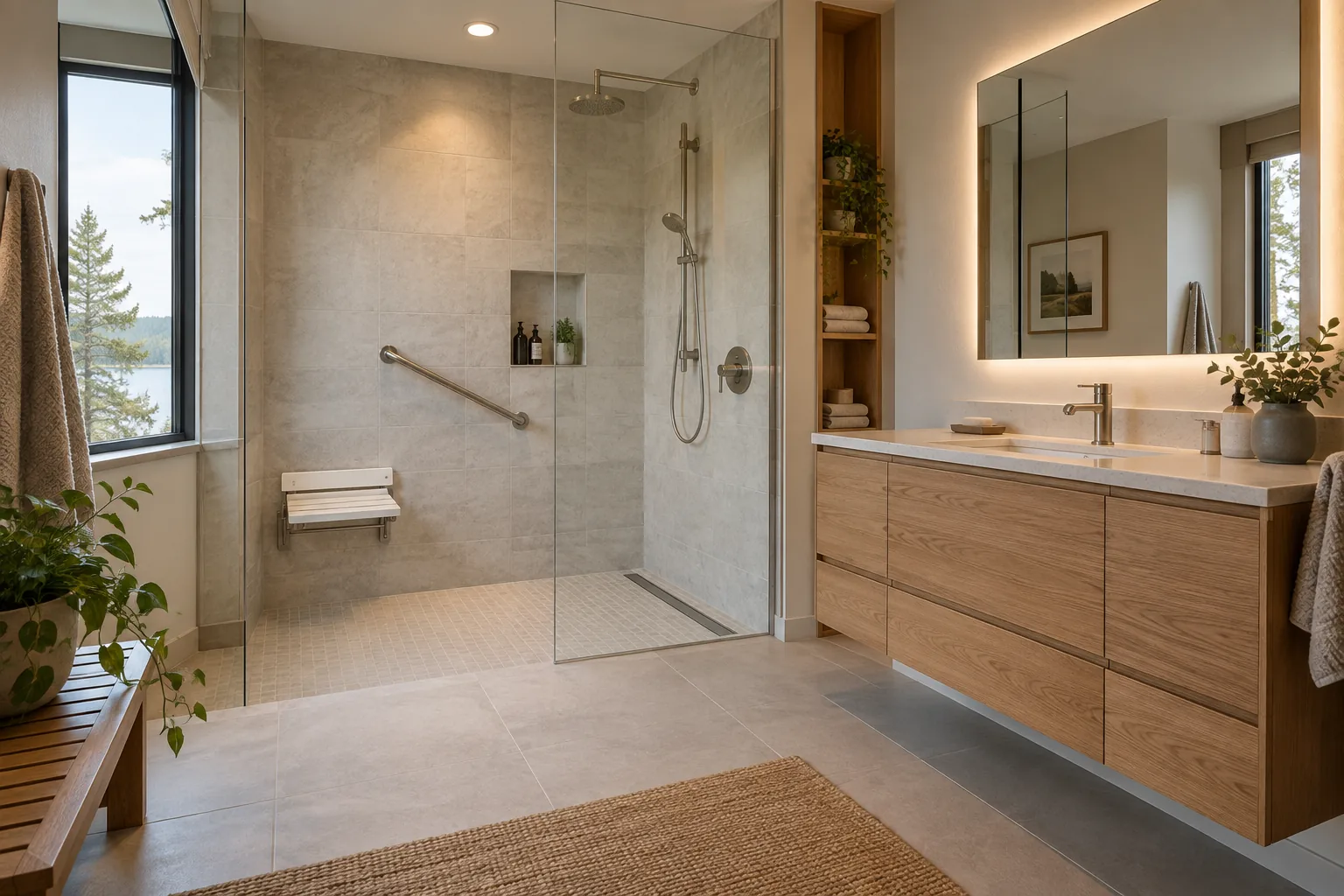
Bring a bathroom's everyday touch points into a coherent, easier-to-use arrangement while keeping sound fixtures and serviceable finishes where they work.
Assess the existing conditions
List tap controls, shower trim, rails and accessories, recording fixing positions and the condition underneath. Check compatibility with concealed valves before choosing visible trim that merely resembles the existing fitting.
Choose the complete system
Compare grip, reach and cleaning access as well as finish. A towel rail that looks balanced can still obstruct a transfer route, and a larger handle may conflict with the wall or enclosure.
Plan the connected work
Agree who handles plumbing and any electrical interfaces, and how redundant holes are repaired. Coordinate finish samples under the room's lighting so mixed metals or surface textures are deliberate choices.
What shapes the scope?
- Compatibility with retained valves and mounting patterns
- Number of accessories and required wall support
- Redundant-hole repairs and finish matching
- Plumbing access, protection and operational testing
What should be checked?
- Controls operate comfortably through their intended travel
- Rails and accessories are secure in their agreed locations
- Repairs, product details and care instructions are documented
Questions worth asking
Can I change only the shower trim?
Only if the manufacturer confirms compatibility with the existing valve. A visually similar plate does not establish a correct fit or operating relationship.
Should every accessory match exactly?
A consistent finish family can be effective, but practical grip, reach and service access should take priority over an exact decorative match.
Bring the details together.
Add this service to My project. Tell HAUSE what you have, what you want to achieve and where the work is needed. A clearer brief makes it easier to discuss the right assessment, responsible trades and written scope.
Build my project brief ↗