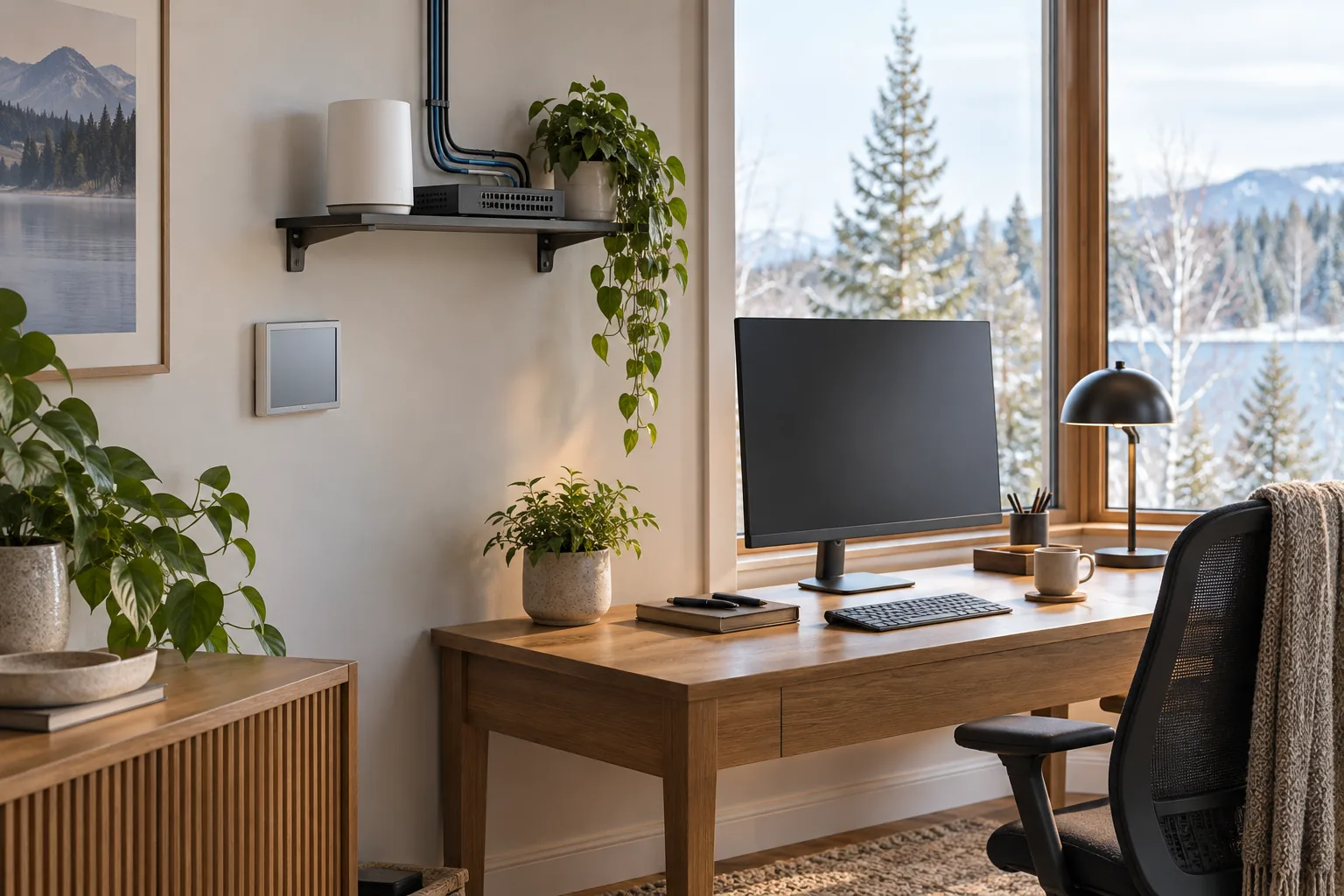
Make existing connected equipment behave like a useful household system, with clear controls and ownership rather than a collection of unrelated apps.
Assess the existing conditions
Inventory devices, protocols, accounts and the routines that should improve. Identify essential functions that need to remain available if a cloud service, internet connection or hub fails.
Choose the complete system
Compare local and cloud-dependent control, compatibility and supported updates. A single interface can simplify use, but only if the devices and integrations support the required behaviour. Agree what should happen after a router restart, a changed phone, or an internet outage before accepting the proposed automation.
Plan the connected work
Agree permissions, physical controls and recovery information before programming. Demonstrate everyday scenes and failure scenarios, and remove unnecessary installer access after ownership is transferred.
What shapes the scope?
- Device inventory and compatibility assessment
- Hub, network and integration requirements
- Scene programming and physical controls
- Account transfer, documentation and testing
What should be checked?
- Agreed routines work with the actual devices
- Essential functions have an understood fallback
- Accounts and recovery information belong to the household
Questions worth asking
Can every existing smart device join one system?
No. Protocol, manufacturer support and available integrations determine what is practical.
Should every routine be automated?
Automate useful, predictable tasks first. Keep simple manual control where household members need it.
Bring the details together.
Add this service to My project. Tell HAUSE what you have, what you want to achieve and where the work is needed. A clearer brief makes it easier to discuss the right assessment, responsible trades and written scope.
Build my project brief ↗