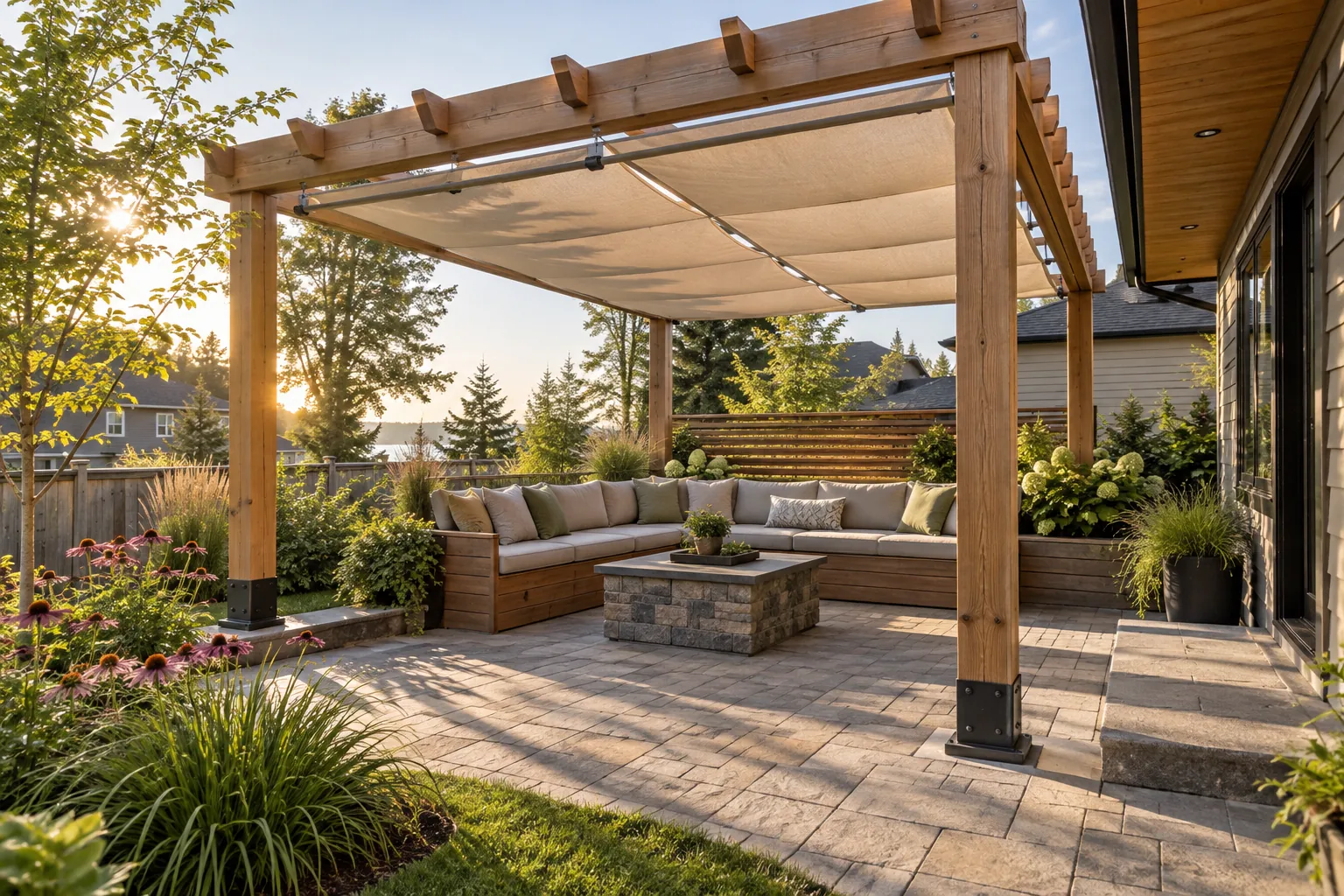
Extend comfortable use of an existing garden, deck or entry with light that helps people move and gather without overwhelming the night.
Assess the existing conditions
Walk the route after dark and identify steps, changes of direction and gathering areas. Record existing power, planting growth and views from inside the home before choosing fixture positions.
Choose the complete system
Compare shielded path light, focused task light and subtle ambient lighting. Brightness alone is not the goal: glare at eye level can make nearby dark areas harder to read.
Plan the connected work
Coordinate electrical suitability, cable protection and controls with the actual outdoor exposure. Keep fixtures accessible for care and allow adjustment after planting or seating arrangements are finalized.
What shapes the scope?
- Route length, existing power and cable access
- Fixture suitability, shielding and mounting locations
- Controls, zones and integration with retained equipment
- Ground disturbance and reinstatement of surfaces
What should be checked?
- Steps and changes of direction are readable without harsh glare
- Controls and agreed zones operate as demonstrated
- Fixture and connection access supports future care
Questions worth asking
Should every part of the garden be lit?
No. Concentrate on useful routes and activities, while considering neighbouring windows and the view from the house.
Can the existing transformer or controls stay?
Have the provider check capacity, compatibility and condition for the proposed equipment instead of assuming all low-voltage products interchange.
Bring the details together.
Add this service to My project. Tell HAUSE what you have, what you want to achieve and where the work is needed. A clearer brief makes it easier to discuss the right assessment, responsible trades and written scope.
Build my project brief ↗