Recover the character of a serviceable timber floor while choosing a finish suited to the room's light, traffic and future care.
Assess the existing conditions
Assess board thickness, previous sanding, loose areas and stains before agreeing to refinish. Deep moisture damage or exposed fixings may limit the achievable result and require selective repairs first.
Choose the complete system
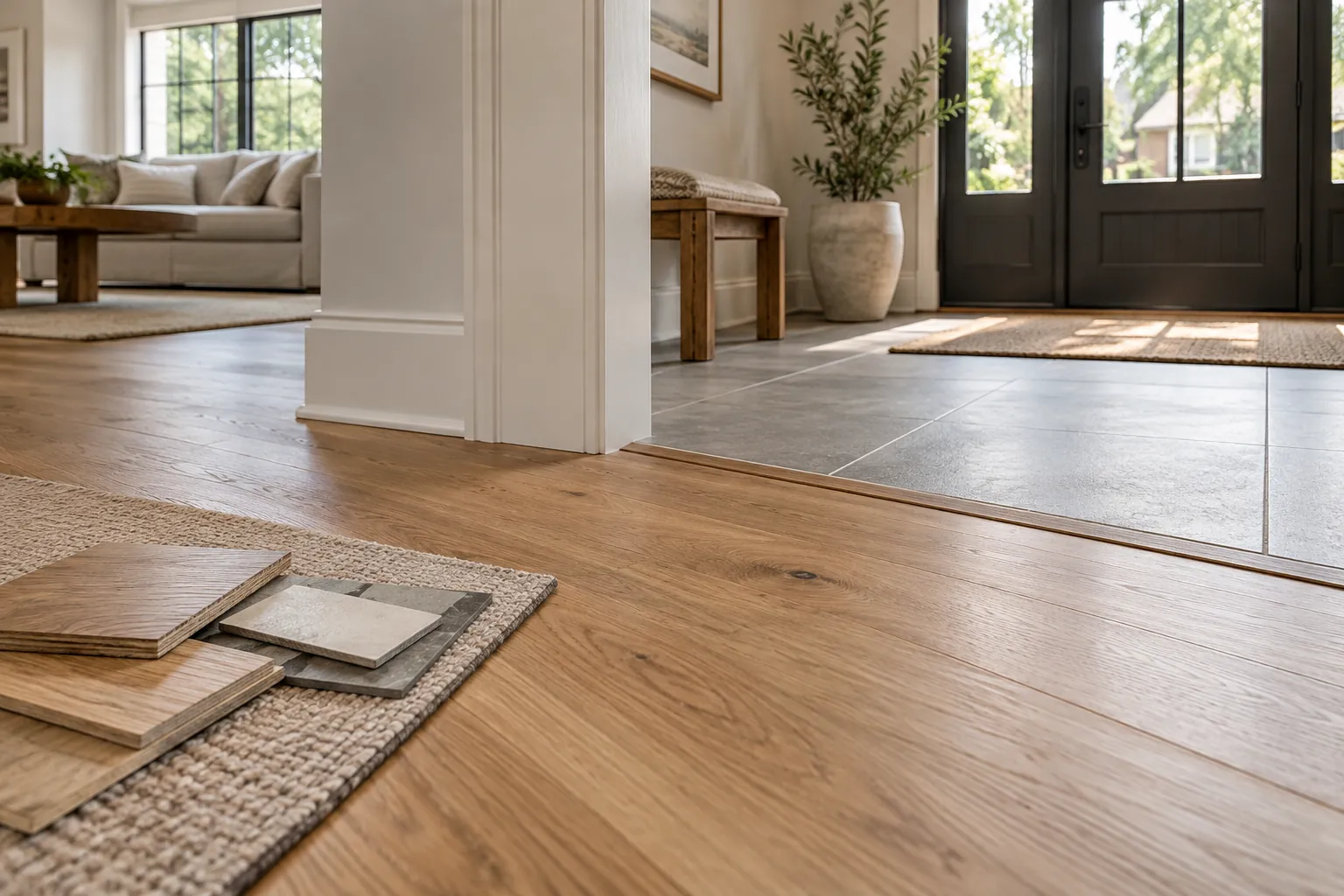
Approve a stain-and-finish sample on representative timber, including colour variation between boards. Discuss sheen, odour, protection and curing conditions; a small swatch cannot fully predict a large room's appearance.
Plan the connected work
Plan room access and furniture storage around the complete finishing process. Clarify edge treatment, stair or threshold work and the point when normal use, rugs and heavy furniture can return.
What shapes the scope?
- Remaining usable timber and repair requirements
- Existing coatings, stain treatment and colour selection
- Edges, stairs, room access and dust protection
- Selected finish system and curing arrangements
What should be checked?
- Agreed repairs and visible sample expectations are reviewed
- Edges and adjoining surfaces receive the specified treatment
- Return-to-use and cleaning guidance are supplied
Questions worth asking
Will sanding remove every dark mark?
Not necessarily. Ask which stains may remain and compare a local repair with accepting some original character.
Can one room match an older adjoining floor?
A close match may be possible, but age and past coatings affect colour. Review samples and the transition before choosing the scope.
Bring the details together.
Add this service to My project. Tell HAUSE what you have, what you want to achieve and where the work is needed. A clearer brief makes it easier to discuss the right assessment, responsible trades and written scope.
Build my project brief ↗