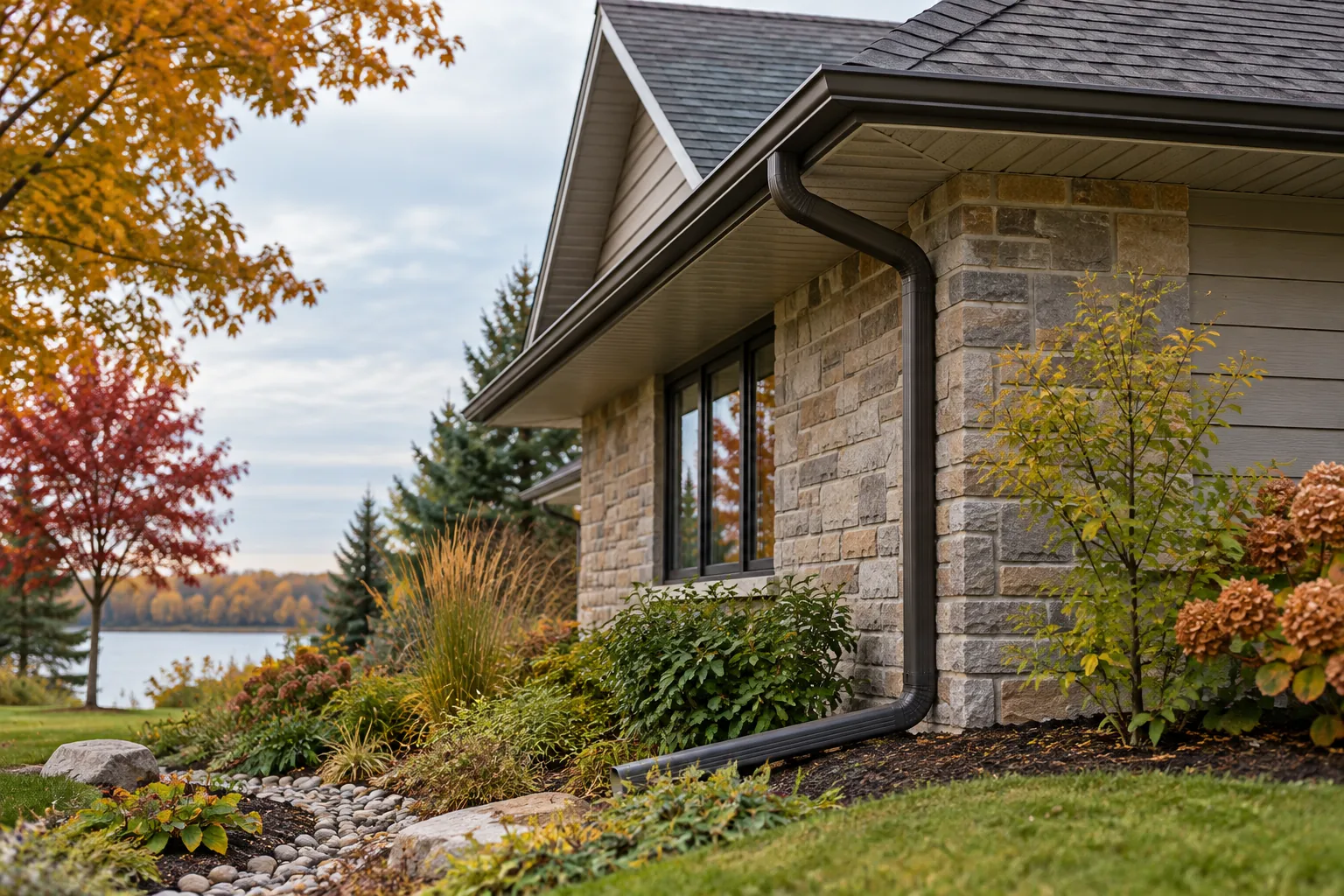
Manage roof runoff more deliberately so an entry, patio or foundation edge is less exposed to avoidable water concentration.
Assess the existing conditions
Observe where water travels during rain or thaw and inspect the existing gutter fall, outlets and discharge locations. Separate a capacity or routing problem from debris that belongs in routine maintenance.
Choose the complete system
Compare outlet changes, gutter alterations and discharge routes with the site's levels and nearby property. Moving water away from one doorway should not create a new ponding or icing problem elsewhere.
Plan the connected work
Coordinate any roof-edge or landscape work with the revised plan. Define how visible performance will be reviewed, what remains outside the scope and which areas require further drainage assessment.
What shapes the scope?
- Roof area and existing gutter or outlet arrangement
- Access height and roof-edge condition
- Discharge route, site levels and connected landscape work
- Drainage assessment and required restoration
What should be checked?
- Outlets and discharge paths match the agreed plan
- Water is not directed onto the main walking route
- Accessible care points and remaining limitations are documented
Questions worth asking
Will larger gutters fix every overflow?
Not necessarily. Fall, outlets, blockage and roof geometry can influence performance; assess the cause first.
Is cleaning included in this upgrade?
Clarify it separately. Routine clearing belongs with Maintaining; this scope changes the arrangement or capacity to address an identified performance problem.
Bring the details together.
Add this service to My project. Tell HAUSE what you have, what you want to achieve and where the work is needed. A clearer brief makes it easier to discuss the right assessment, responsible trades and written scope.
Build my project brief ↗