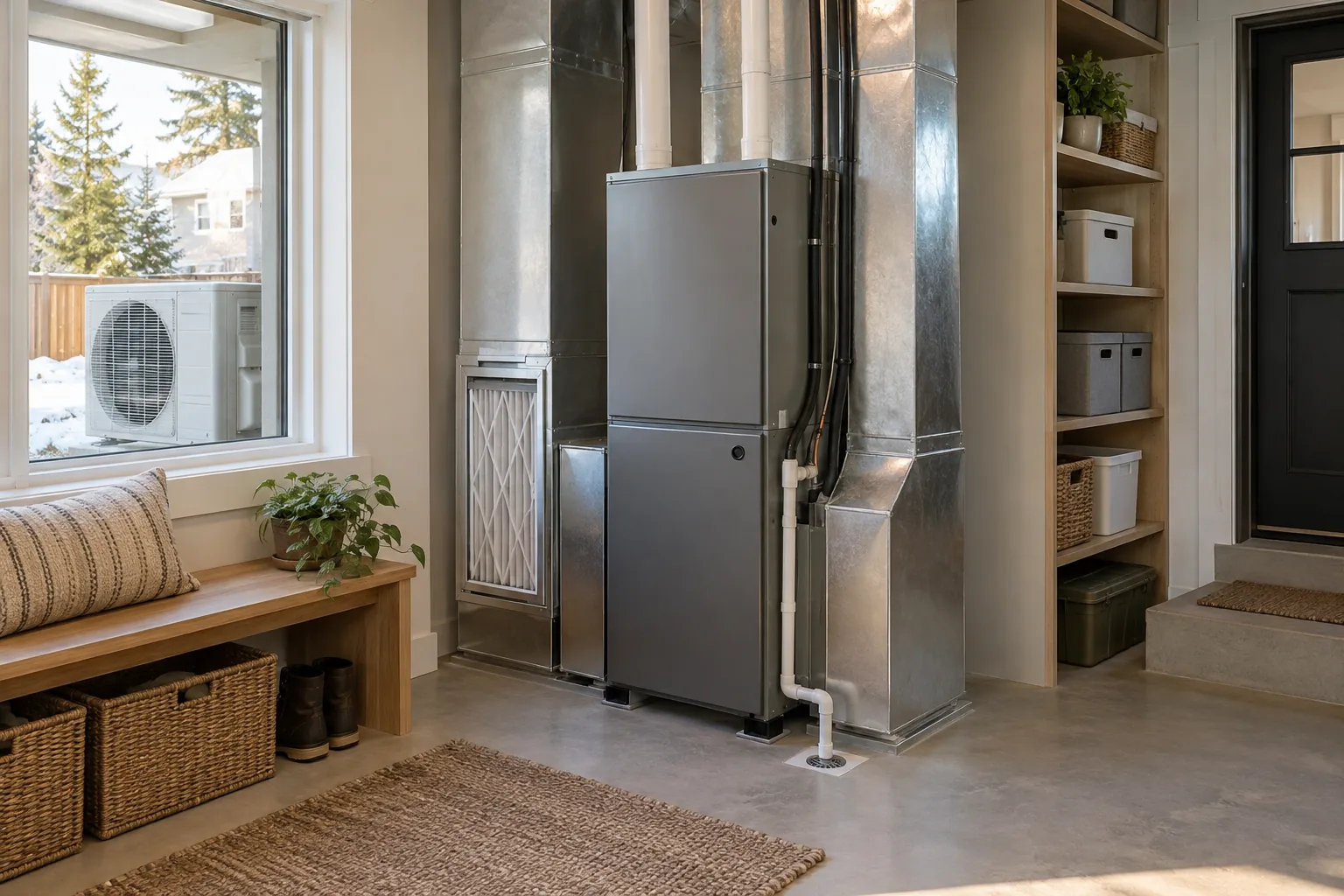
Improve an existing central-vacuum system by assessing the retained pipework, inlets and accessories before selecting a new power unit.
Assess the existing conditions
Record the current equipment and symptoms, checking accessible pipe connections and the rooms served. A weak cleaning result may come from a blockage, leak or incompatible accessory rather than the motor alone.
Choose the complete system
Compare power-unit, hose and head compatibility with the actual system. Electrical accessories and tubing arrangements are product-specific; do not assume plumbing pipe or a visually similar inlet is interchangeable. Check hose reach from existing inlets to the rooms that matter, including stairs, without assuming a stronger power unit improves access.
Plan the connected work
Coordinate safe electrical work and practical canister or filter access. Demonstrate representative inlets and cleaning tools, retaining model and care information for the household.
What shapes the scope?
- Existing system investigation and pipe access
- Power-unit and accessory compatibility
- Electrical or inlet alterations
- Testing and service-access requirements
What should be checked?
- Representative inlets and tools operate as agreed
- Dust collection and maintenance access remain practical
- Installed models and care information are supplied
Questions worth asking
Can a more powerful unit fix a blocked line?
Not by itself. Investigate the retained distribution before choosing equipment.
Can every hose fit every inlet?
No. Mechanical and electrical compatibility need checking against the exact system.
Bring the details together.
Add this service to My project. Tell HAUSE what you have, what you want to achieve and where the work is needed. A clearer brief makes it easier to discuss the right assessment, responsible trades and written scope.
Build my project brief ↗