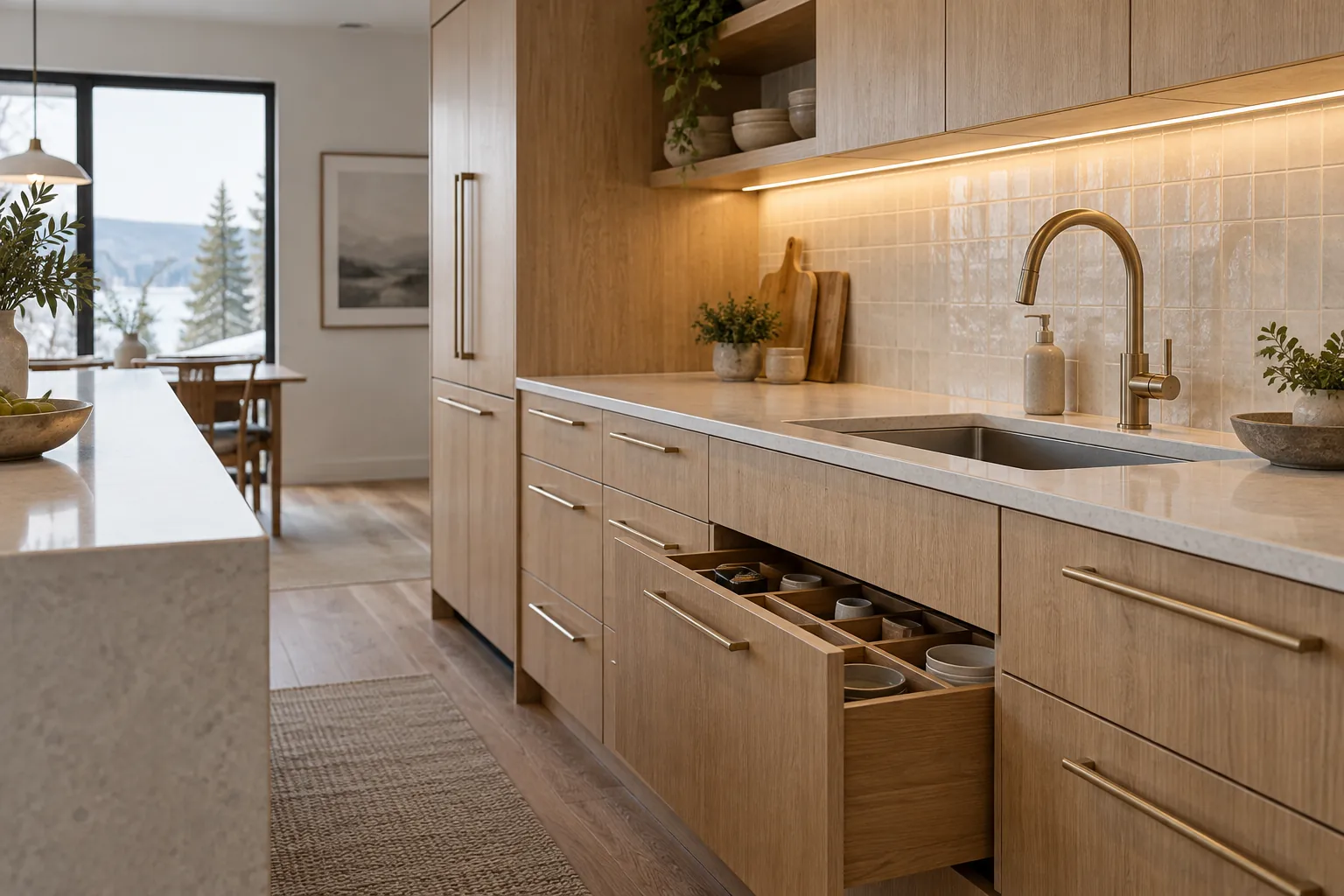
The most satisfying kitchen upgrade often improves the parts you touch every day: a drawer that opens fully, a counter you can light properly, or a pantry that stops hiding its contents. Start with what the existing kitchen does well.
Keep the right assets
A stable cabinet run and a useful appliance layout are valuable starting points. Ask a cabinetmaker to assess fixings, movement and damage around the sink before committing to refacing or refinishing. Keep a written distinction between cosmetic wear and a box or worktop that has lost its integrity.
Design the working relationships
Front thickness changes hinge geometry; a deeper sink changes the cupboard below; a worktop edge affects the backsplash. Put these interfaces on one measured plan. Compare reach, grip, cleaning and clearance with the household's ordinary meal preparation instead of choosing each product separately.
Choose a sensible sequence
Investigate defects, decide fixtures and finishes, adapt cabinets, then coordinate connected trades and final surfaces. A small trial can resolve a handle, finish or lighting decision before it is repeated throughout the room. Protect temporary access to food preparation, water and essential appliances.
Turn the enquiry into a useful brief
Tell HAUSE which parts should stay, what frustrates you and whether the kitchen must remain partly usable. Include a few safe photographs and approximate dimensions. Ask for a scope that names preparation, exposed ends, hardware, electrical or plumbing interfaces and the handover checks, so competing proposals describe the same complete improvement.
Details to bring into the conversation
- A new front cannot stabilize a loose or water-damaged cabinet box.
- Specify curing and return-to-use arrangements for coatings around food preparation.
- Retain service access below sinks and behind integrated appliances.