A comfortable home holds a more useful temperature from room to room without becoming stuffy, noisy, or difficult to control. Start with the lived problem, then coordinate the building envelope, distribution, controls, and equipment.
Identify the pattern
Record which rooms feel cold or hot, the time of day, outdoor conditions, and whether doors or blinds change the experience. A sunny upstairs room and a draughty ground-floor room may need different interventions. These observations help distinguish heat loss, solar gain, air leakage, distribution problems, and control limitations before equipment is selected.
Improve the building and the system together
Natural Resources Canada’s retrofit guidance treats insulation and air leakage as connected building issues. Sealing a gap is useful only when the surrounding assembly remains dry and ventilation needs are addressed. Review roof, wall, window, and basement conditions alongside heating and cooling so the sequence protects finished surfaces and avoids trapping an unresolved moisture problem.
Select equipment for actual conditions
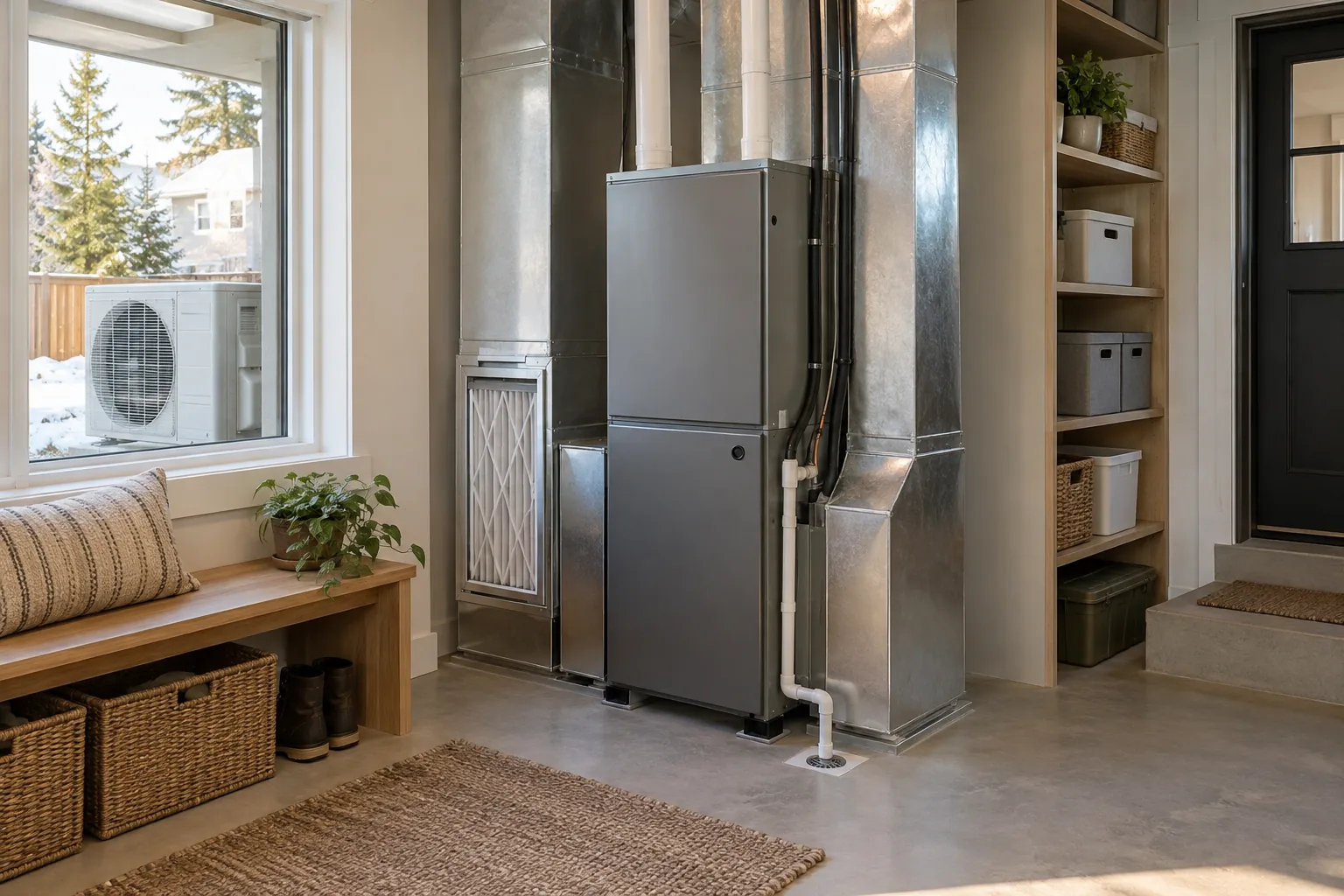
Heat-pump planning needs a suitable load assessment, local outdoor conditions, distribution review, controls, and a considered backup strategy. Bigger equipment is not automatically more comfortable. Discuss cold-weather performance, defrost arrangements, indoor-unit locations, sound, service access, and how the system will behave in the rooms you use most.
Make commissioning part of the brief
A useful comfort scope includes setup and demonstration, not only an equipment list. Ask how airflow, controls, operating modes, and any supplementary heating will be checked. HAUSE can help define the improvement you want and the questions a qualified provider needs to answer, with phased work where the envelope should be addressed before final equipment decisions.
Details to bring into the conversation
- Investigate condensation or dampness before covering the affected assembly.
- Ventilation requirements can change after significant air sealing.
- Request documented equipment selection rather than an unsupported comfort promise.